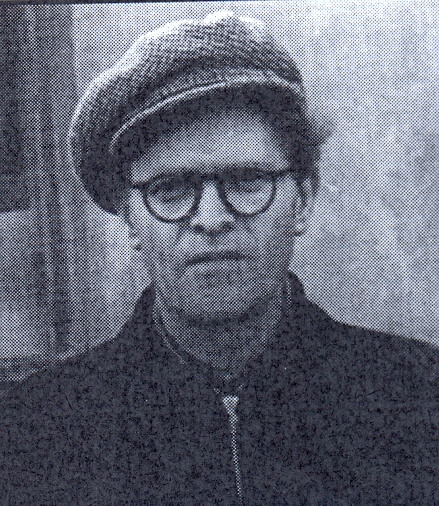
This year Matus Iakovlevich Livshits could be ninety years of age. As Honoured Art Worker and former senior researcher of the Academy of Science of Moldova he played considerable role in the development of a study of art in Moldova and was well known for his scientific communications and popular science publications at many conferences, symposiums not only in our republic but also outside of it.
All professional activity of M.I. Livshits was connected with Moldova. The graduate of Moscow State University by the name of M.V. Lomonosov (1950) was placed on a job to Kishinev and became scientific collaborator of the Art public museum. He carried on his broad shoulders not only the years of study at the famous professors, but also the checkout of time of war. Being a student he went to the front on a voluntary basis and as the translator of a reconnaissance staff of the 34thArmy. Then he was an interpreter of the first class of the staff of the 370thrifle Brandenburg division where he took part in some battles for the seizure of Berlin deserving nine medals and two orders.
In museum young art historian has matured skillfully as a critic and lecturer. His museum excursions like lectures were used by enormous popularity. Especially there was his lecture on the theme” How to see and understand visual arts” which perfected before the end of life of the scientist. During his establishment the contacts with painters, conversations in works played important role when the friendship started with a lot of them and continued for all life. Just during this communication with many artists he improved his practical skill of an analysis of some works. Especially there were valuable debates about the problems of arts with such painters as Mihail Grecu, Ada Zevina. Divergence of views only heightened mutual interest consolidating friendly connections.
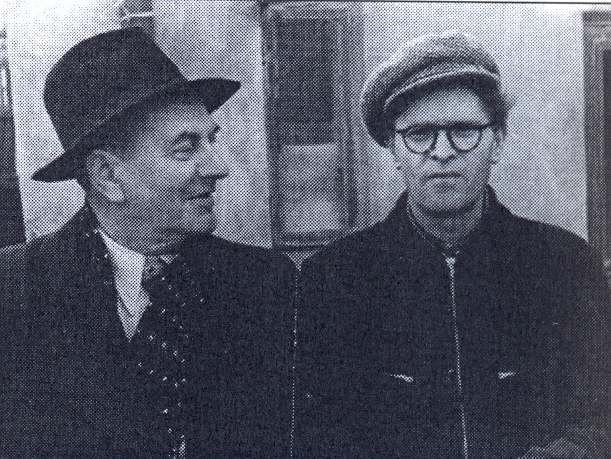
The first works in a study of art in the republic belonged to M.I. Livshits. There was the guide book on museum’s rooms (1953), a few articles with the interpretation of artistic process, the creation of certain master. He became an author and co-author of first books devoted to visual arts of Moldova issued at Kishinev and Moscow in 1957-58. The presence of “a seal of time” in his ancient works was inevitable for the years of ideological pressing, otherwise watchful censors would not admit any little note for the press. But after ten years had elapsed many of his professional descriptions of some works of painters turned out correct ones. Objective character of valuation of this scientist supposes the exposure of his personal position and illumination of all which was made by him for taking roots of progressive tendencies in the field of art.
First of all it’s the courage of art critic capable of rising actual problems and persisting in his opinion in turn with the logic. Hardly had the period “of thaw” begun, when he as a man of democratic views made statement against directive critique, rectilineal edifying quality in the guidance of art study, projected the way to the emancipation, the search of plastic expression. In his article “After the Congress of artists” (magazine “October”, 1956, Nr. 12) M.I. Livshits called to the widening of traditions, learning all the best that was created by theworld artistic culture including the experience of impressionism and post-impressionism. He called painters not to be afraid of stylization, ornamentation, unusual colour combinations reminding of violent self-restriction was brought to cleaning of creative individuality by many authors. After this publication M.I. Livshits was picked to pieces at party meetings during a few years, hold up him to shame in editorial article “Soviet Moldavia”. But the most part of Artists’Union supported him because he stated that which has became ripe into the creative environment. M. Livshits projected the way to emancipation, the search of new tendencies for the progress of plastic expression.
The critic supported innovative works in the beginning of the sixties, standing up for rights of artist on creative experiment. At that time he was not only accused from the positions of vulgar sociologism, but also he was forced to resign from the scientific secretary of museum, using then the usual methods as denunciation, inspection of his activity by incompetent functionaries, pronunciation “for frustration of political educational work”.
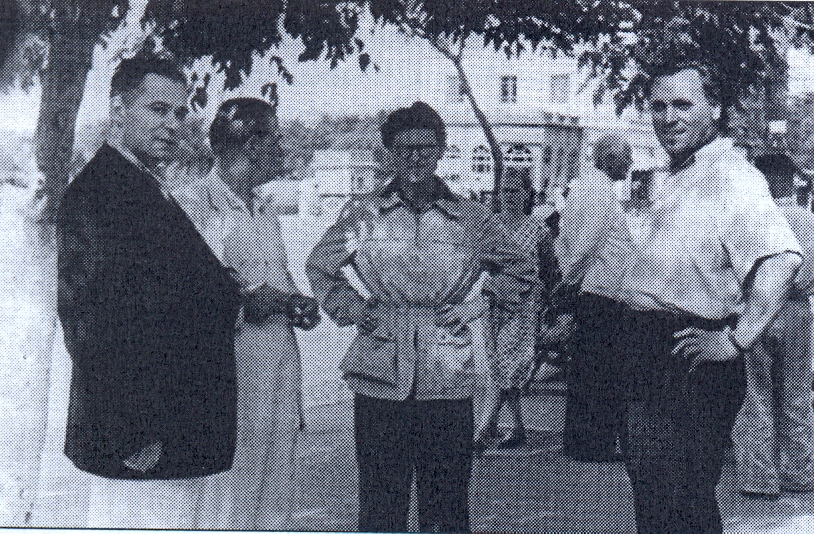
Art historian found an outlet in preservation of independence, uniting his creative interests with the field of decorative applied art of Moldova, that the least dependent on ideology and being intimate with him. The originality of national popular creation was perceived by him during a process of the preparation of his album Portul naţional moldovenesc (coauthor — A. Zevina. Chişinău, 1960), and when M.I. Livshits with painter Fira Grecu went to the villages where popular masters made ceramic dishes.
From 1962 M. Livshits did the research work in the Academy of Science of Moldova paying special attention to some problems of study of national graphic folklore. For many years he selected some monuments in different regions of the republic, he took himself pictures and slides. Aggregated and examined material was generalized in his monographs The decor in national architecture of Moldavia (Декор в народной архитектуре Молдавии. Кишинев, 1971), Decorative and applied arts of Moldavia (Декоративно-прикладное искусство Молдавии. Кищинев, 1980) at alias. Sensible problems of artistic culture in original way were recounted in his reports at international conferences, in a few articles published in reputable magazines and collectors.
The scientist put forward the method of classification and analysis of some branches of national creation including old and new ones, revelation their interaction and also connection between graphic forms of national creation and professional art. According to his convictions the main factor of delimitation and typification was the relation of a master to the tradition appearing at different levels of the creation.
In 1969 M.I. Livshits headed generated sector of art history at the department of ethnography of the Academy of Sciences of Moldova, favoured to professional development of young specialists supporting the right of a researcher on own point of view. But his democracy was not without any punishment. As principal editor he admitted the articles for scientific collectors which according to opinion of watchful censors “from alien positions for Marxist-Leninist aesthetics”. In 1983 after dismissal from office of a few exposed art historians in such sin M.I. Livshits who was reduced from his postand passed to the department of ethnography. But he continued to defend the right of some researcher on his own point of view, subjective relationship to problems of development of modern art.
Unfortunately, prepared interesting works such as a monographProfessional art and folklore (Профессиональное искусство u фольклор) and unique book of album type Popular sculpture of Moldova (Народная скульптура Молдовы) were not published by this scientist.
During many years M.I. Livshits combined scientist work with teacher’s one at the Institute of Arts by the name of Muzichesku in Kishinev. It was widely known about his illuminator activity such as a number of fascinating lectures of different subject matters which were read by him for very various listeners. Among them there were citizens of Wiesbaden where the scientist lived for his last years and non in an isolation.
Everybody who was knew Matus Iakovlevich was surprised by invariable vital energy and young spirit of this charming man that always had taken a benevolent interest in an interlocutor. He attracted to himself by his erudition, lively intellect and as true intellectual was simple for communication. He was ready to have a debate with less well-educated and experienced men being equal because there was confidential and sincere atmosphere.
I had a luck not only to take party in some conversations on professional themes which appeared during communication with M.I. Livshits, but also listen to his exciting stories about some episodes from eventful biography. The recollections were written by him in more full and consecutive form and undoubtedly publishing of these memoirs will be interesting for everybody who wasn’t indifferent to the history of native culture.
The work of M.I. Livshits as the doctor of Arts study (1964), Honoured Art Worker (1980), was marked by diplomas of Union of Artists of USSR (1968, 1974, 1975, 1979, 1982). Among his decorations as a participant of war against fascists there is an Order of the Red Star and the Second class Order of Great Patriotic War.
Aut. TOMA, Ludmila. Doctor of history and theory of fine arts Matus Livshits (1920—2007). In: Rev. ARTA, seria Arte Vizuale, Chişinău, 2010, pp. 135-137.
 Chișinău, orașul meu